
Overview
Robots are increasingly expected to operate in unstructured and dynamic environments. In such environments, robots must be capable of performing complex and diverse tasks, which places new demands on robustness and interpretability of robot perception.
In this workshop, we aim at examining the state of the art in robot perception and discuss what is still missing for achieving these properties for rigorous robot perception. We will discuss how perception in modular pipelines and in end-to-end learning approaches, e.g., using foundation models such as VLMs or VLAs, can support robustness and interpretability. The intended workshop scope is not limited to visual perception, instead we want to also explore how different modalities (e.g. tactile perception) can contribute to answering above questions. Lastly, in the workshop, we will ask how robustness and interpretability can be assessed for robot systems.
By invited talks, roundtable discussions, and spotlight/poster presentations of contributed extended abstracts, the workshop provides an opportunity to identify open challenges, assess the promises and limitations of current approaches, and chart new directions for achieving robust and interpretable perception in robotics.
Speakers
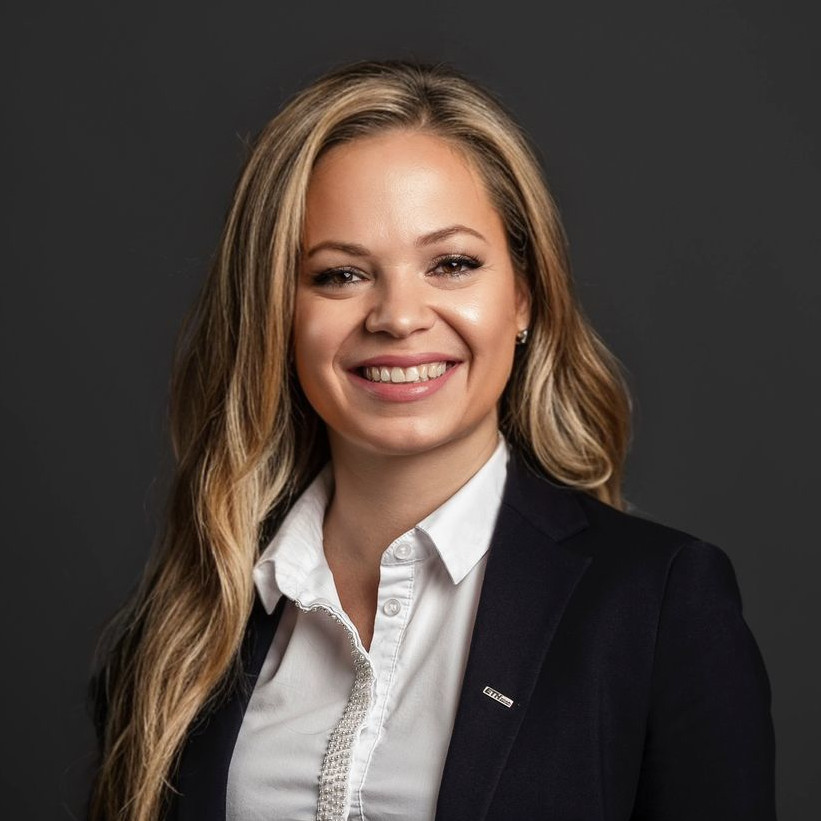
Margarita Chli
ETH Zurich and University of Cyprus
She is a Professor of Robotic Vision and Director of the Vision for Robotics Lab at the University of Cyprus, and a Visiting Professor at ETH Zurich. Her research has pioneered vision-based autonomous flight and collaborative monocular SLAM for drone swarms. She is the recipient of an ERC Consolidator Grant and has delivered invited keynote talks at venues including the World Economic Forum in Davos, TEDx, and ICRA.

Xiaolong Wang
UC San Diego
He is an Assistant Professor in the ECE department at the University of California, San Diego, and a Visiting Professor at NVIDIA Research. His research focuses on the intersection between computer vision and robotics. His specific interest lies in representation learning with videos and physical robotic interaction data. These comprehensive representations are utilized to facilitate the learning of human-like robot skills, with the goal of generalizing the robot to interact effectively with a wide range of objects and environments in the real physical world.
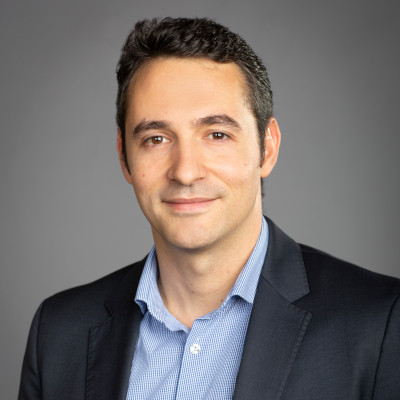
Kostas Alexis
Norwegian University of Science and Technology
He is a Full Professor at the Department of Engineering Cybernetics of the Norwegian University of Science and Technology (NTNU) at Trondheim, Norway. His research goal is to contribute towards establishing true navigational and operational autonomy for robotics.

Yu Xiang
University of Texas at Dallas
He is an Assistant Professor in the Department of Computer Science at the University of Texas at Dallas. His research lies at the intersection of robotics and computer vision, with a focus on enabling intelligent systems to perceive, understand, and act in complex 3D environments.

Georgia Chalvatzaki
TU Darmstadt
She is a Full Professor for Interactive Robot Perception & Learning at the Computer Science Department of the Technical University of Darmstadt and Hessian.AI. Her research focuses on robot learning for mobile manipulation in assistive robotics, advancing embodied AI through methods at the intersection of machine learning and classical robotics.

Alberto Rodriguez (tentative)
Boston Dynamics
He is the Director of Robot Behavior for Atlas at Boston Dynamics with prior roles being Associate Professor in the Department of Mechanical Engineering at MIT, leading the MCube lab. His research focuses on robotic manipulation, emphasizing contact mechanics, tactile sensing, and data-driven control methods. His work integrates modeling, planning, and learning to advance manipulation skills in both academic and industrial robotics.
Schedule
This is a preliminary version of the schedule and may be subject to change.
| Time | Description | |
|---|---|---|
| 8:50 | Opening Remarks by the Workshop Organizers | |
| 9:00 | Topic 1: Perception in Navigation | |
| 9:00 |
Margarita Chli
ETH Zurich and University of Cyprus | TBD (requested: Robustness and Interpretability in Modular Approaches for Navigation) |
| 9:30 |
Xiaolong Wang
UC San Diego | TBD (requested: Robustness and Interpretability in End-to-end Learning Approaches for Navigation) |
| 10:00 | Spotlight Talks | |
| 10:15 | Coffee Break and Poster Session | |
| 11:00 |
Kostas Alexis
Norwegian University of Science and Technology | TBD (requested: Robustness and Interpretability in Application-Oriented Approaches for Navigation) |
| 11:30 | Roundtable Discussion | |
| 12:00 | Lunch Break | |
| 13:00 | Topic 2: Perception in Manipulation | |
| 13:00 |
Yu Xiang
University of Texas at Dallas | TBD (requested: Robustness and Interpretability in Modular Approaches for Manipulation) |
| 13:30 |
Georgia Chalvatzaki
TU Darmstadt | TBD (requested: Robustness and Interpretability in End-to-end Learning Approaches for Manipulation) |
| 14:00 | Spotlight Talks | |
| 14:15 | Poster Session | |
| 15:00 |
Alberto Rodriguez (tentative)
Boston Dynamics | TBD (requested: Robustness and Interpretability in Application-Oriented Approaches for Manipulation) |
| 15:30 | Roundtable Discussion | |
| 16:00 | Closing Remarks | |
Call for Extended Abstracts
We invite the submission of extended abstracts (incl. field reports) on the following topics of interest:
- - Robust perception for navigation in unstructured and dynamic environments
- - Robust perception for manipulation in unstructured and everyday environments
- - Perception in end-to-end learning architectures for robotic navigation and manipulation
- - Interpretability and robustness of perception in end-to-end learning robot systems
- - Uncertainty quantification for robot perception methods
- - Introspection and interpretability of perception methods in robot systems
- - Tactile or visuo-tactile perception for robust contact-rich manipulation in unstructured environments
- - Lessons learned from robot perception in integrated robot systems, incl. informative failure cases
- - Datasets and benchmarks for robustness and interpretability of perception in real-world robot systems
All submitted extended abstracts will be reviewed on the basis of technical quality, relevance, significance, and clarity. The review process will be single-blind. The page limit of submitted extended abstracts is 4 pages including references. Submitted extended abstracts beyond the page limit will be desk rejected without further review. We also accept submissions of previously presented work that you have extended on and work that is being published as part of the ICRA 2026 main conference. Upon acceptance, you will be able to present your submission as part of the poster session. Some extended abstracts will be selected for oral spotlight presentations. All accepted submissions will be available for the workshop on this website (non archival).
Please submit your extended abstracts following the ICRA 2026 format guidelines. For details see the following links:
Please submit your contribution via OpenReview.
Important Dates
Extended Abstract Submission Deadline: April 7 April 17, 2026, 23:59 AoE
Decision Notification: May 8, 2026
Final Version: May 22, 2026
Workshop Date: June 1, 2026
Organizers
Jens Behley
University of Bonn

Maximilian Durner
German Aerospace Center (DLR)

Raphael Hagmanns
Fraunhofer IOSB

Ayoung Kim
Seoul National University
Dimity Miller
QUT Centre for Robotics
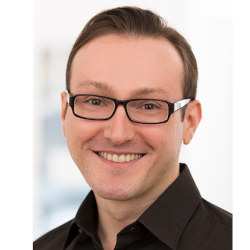
Joerg Stueckler
University of Augsburg
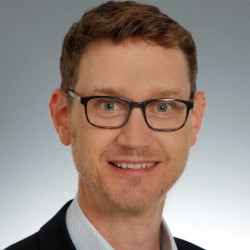
Rudolph Triebel
German Aerospace Center (DLR), Karlsruhe Institute of Technology (KIT)

Wenzhen Yuan
University of Illinois